
Whole Chicken Breakdown
More skills. Less waste. Better meals.
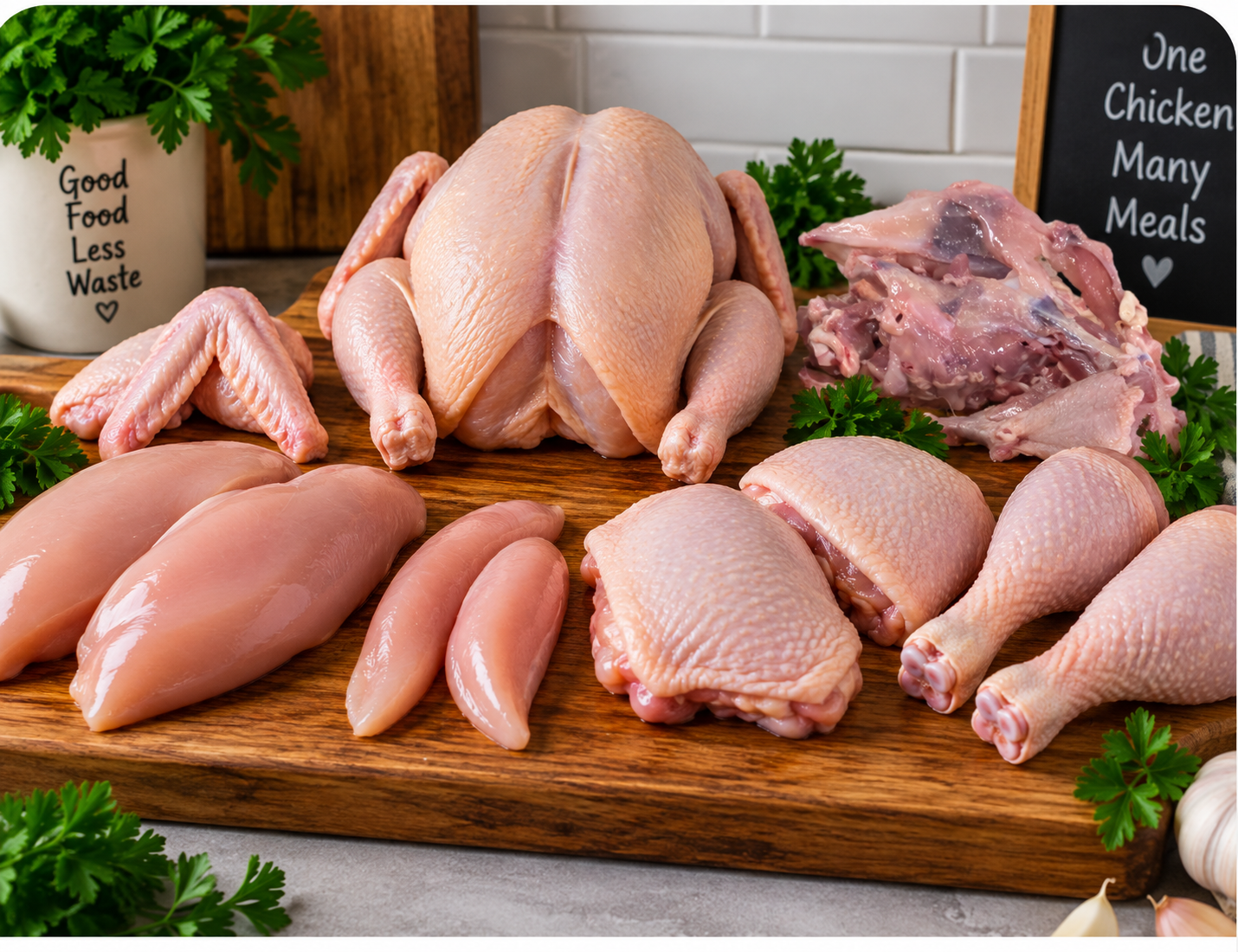
Buying a whole chicken is one of the easiest ways to get better value from your meat. Once you can break one down yourself, you get wings, breasts, tenderloins, thighs, drumsticks and a carcass for stock — several meals from one bird.
 1
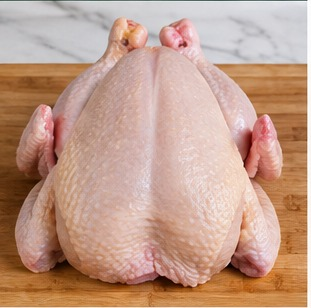
1Whole Chicken
Start with a whole chicken. Make sure your work area, tools and hands are clean.
 2
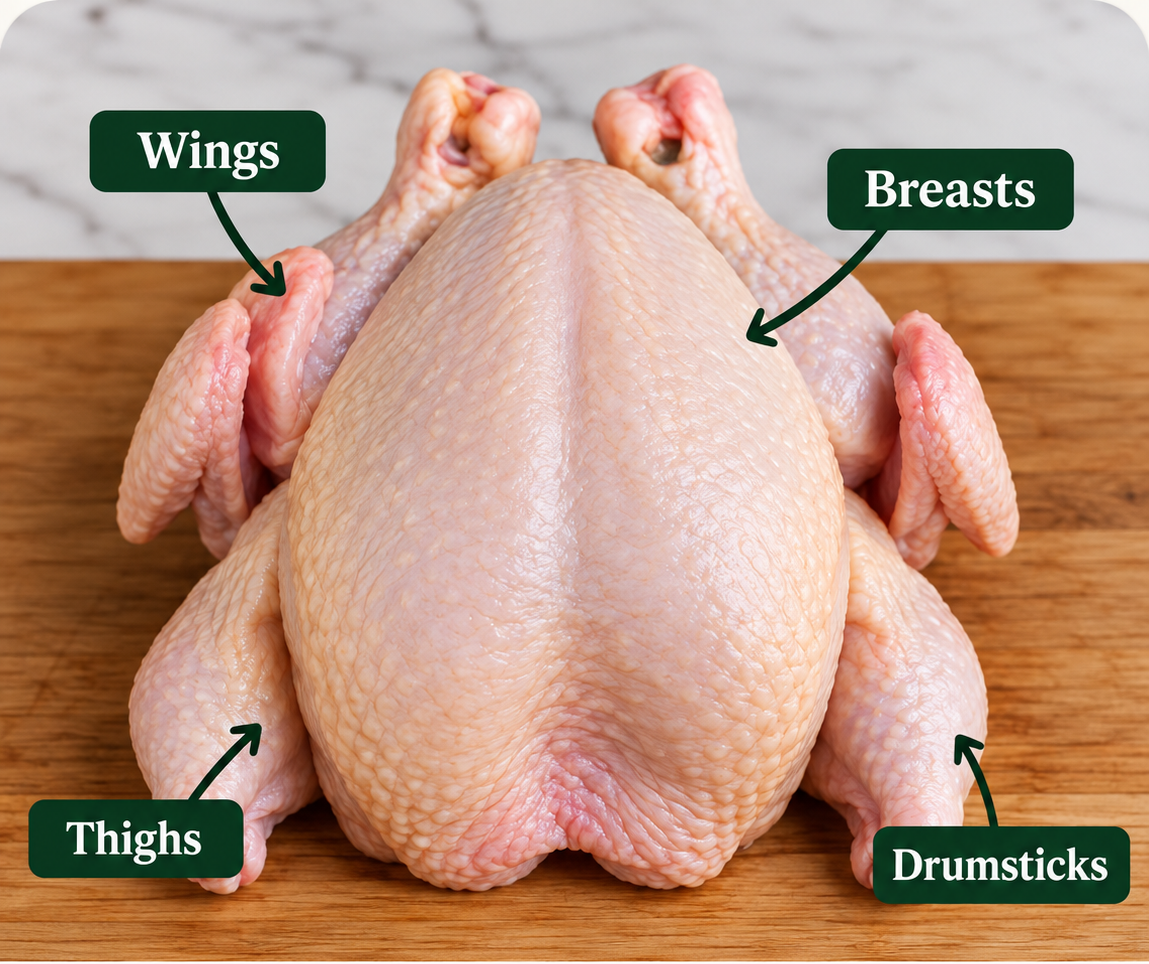
2Plan Your Cuts
Identify the main cuts: wings, breasts, thighs, drumsticks and carcass.
 3
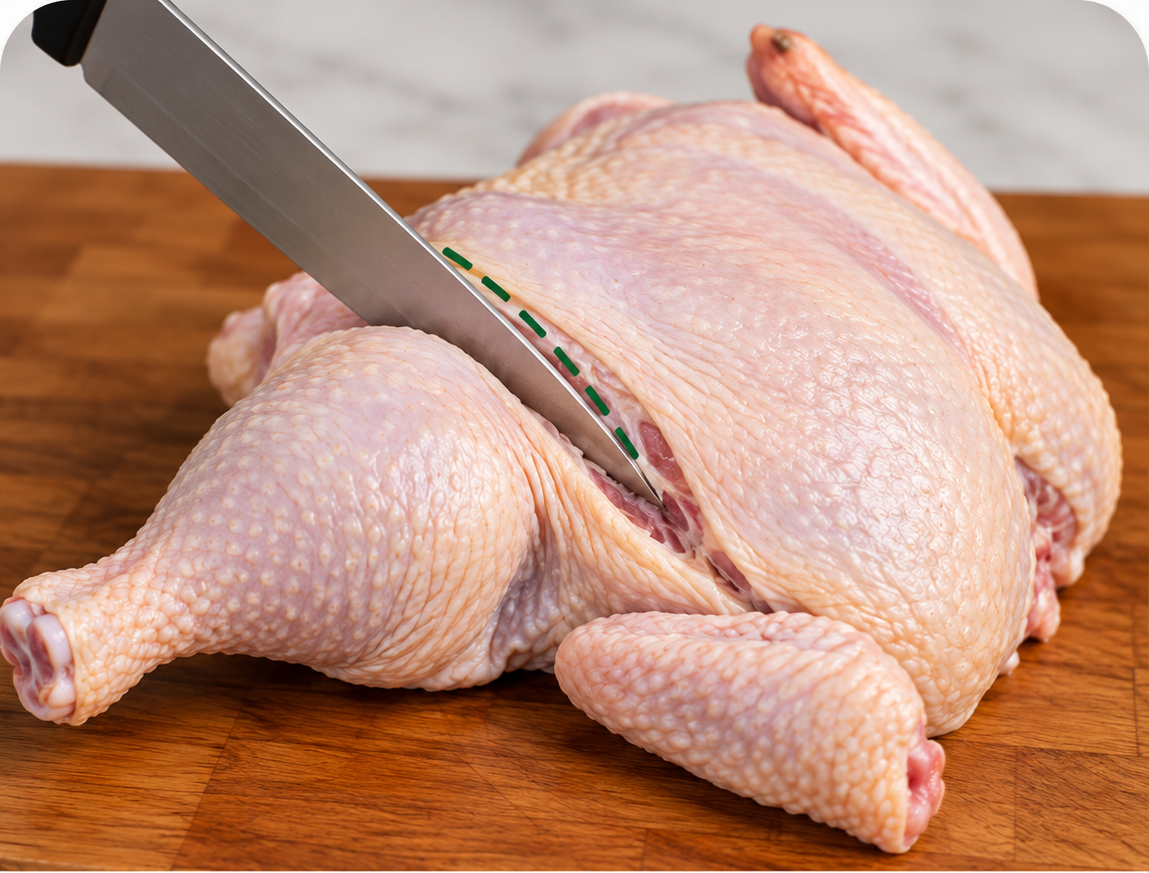
3Remove the Maryland
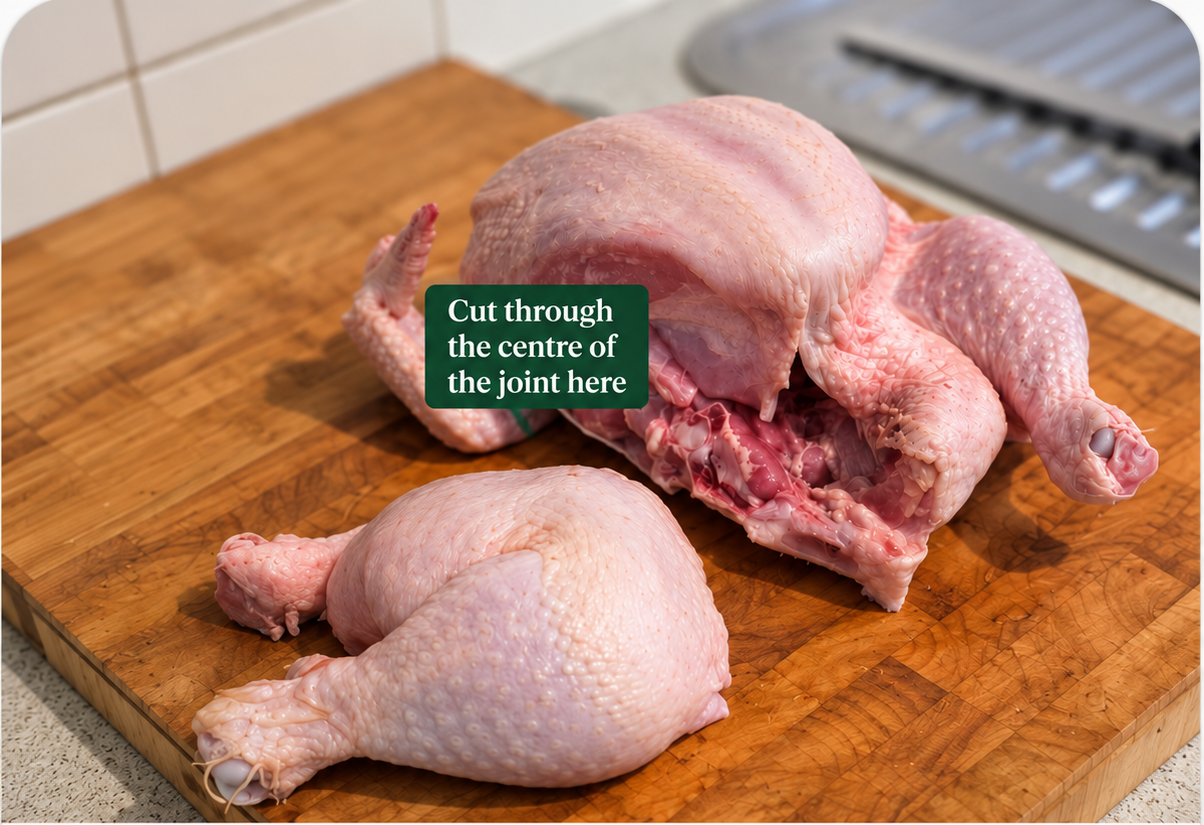
Cut through the skin between the thigh and breast to remove the Maryland.
 4
4Separate Thigh and Drumstick
Find the natural joint between the thigh and drumstick and cut through.
 5
5Remove the Wings
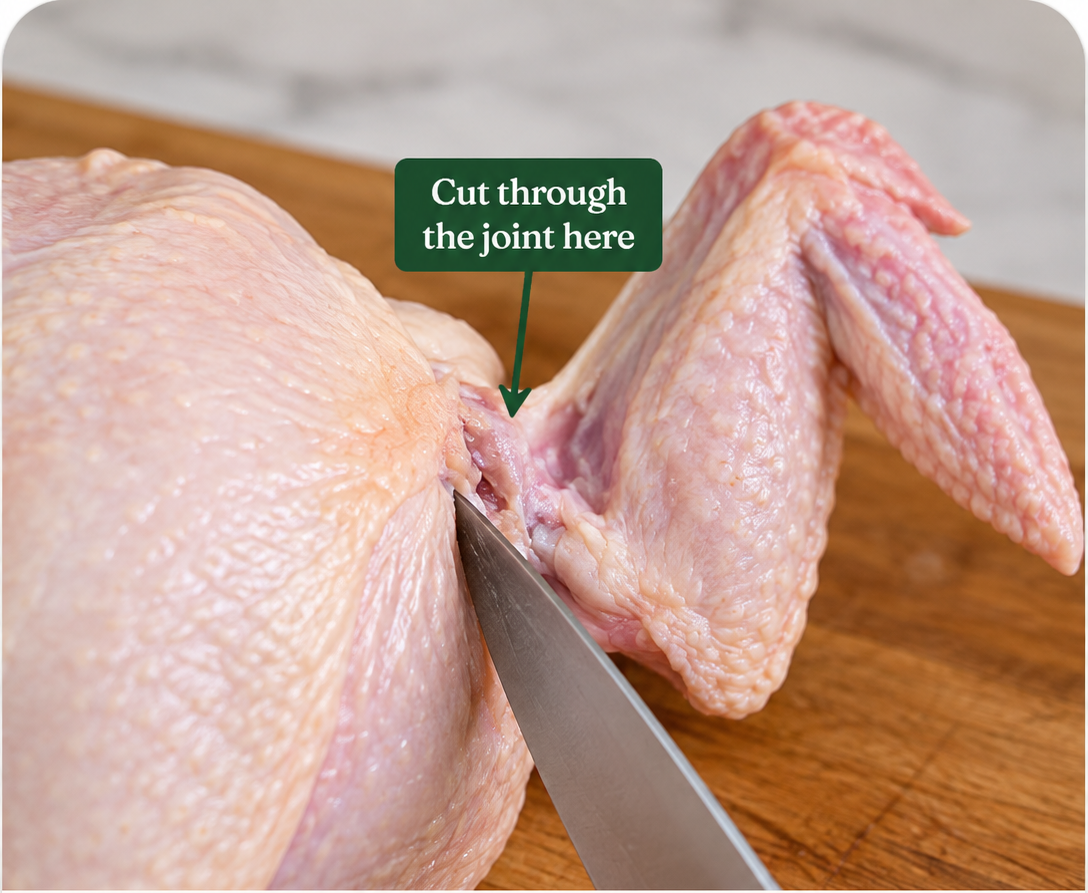
Lift the wing away from the body and cut through the joint.
 6
6Remove the Breast
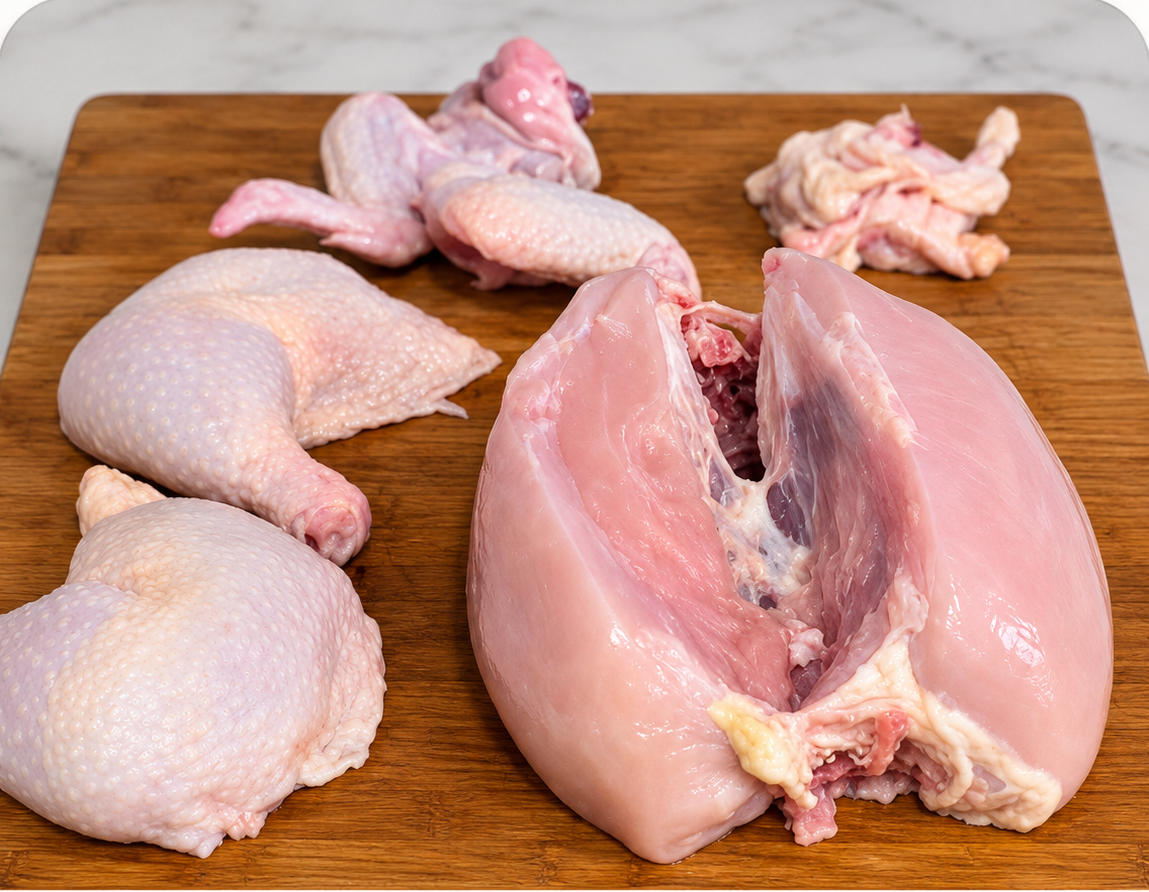
Run your knife along the breastbone, following the rib cage to remove the breast.
 7
7Separate the Tenderloin
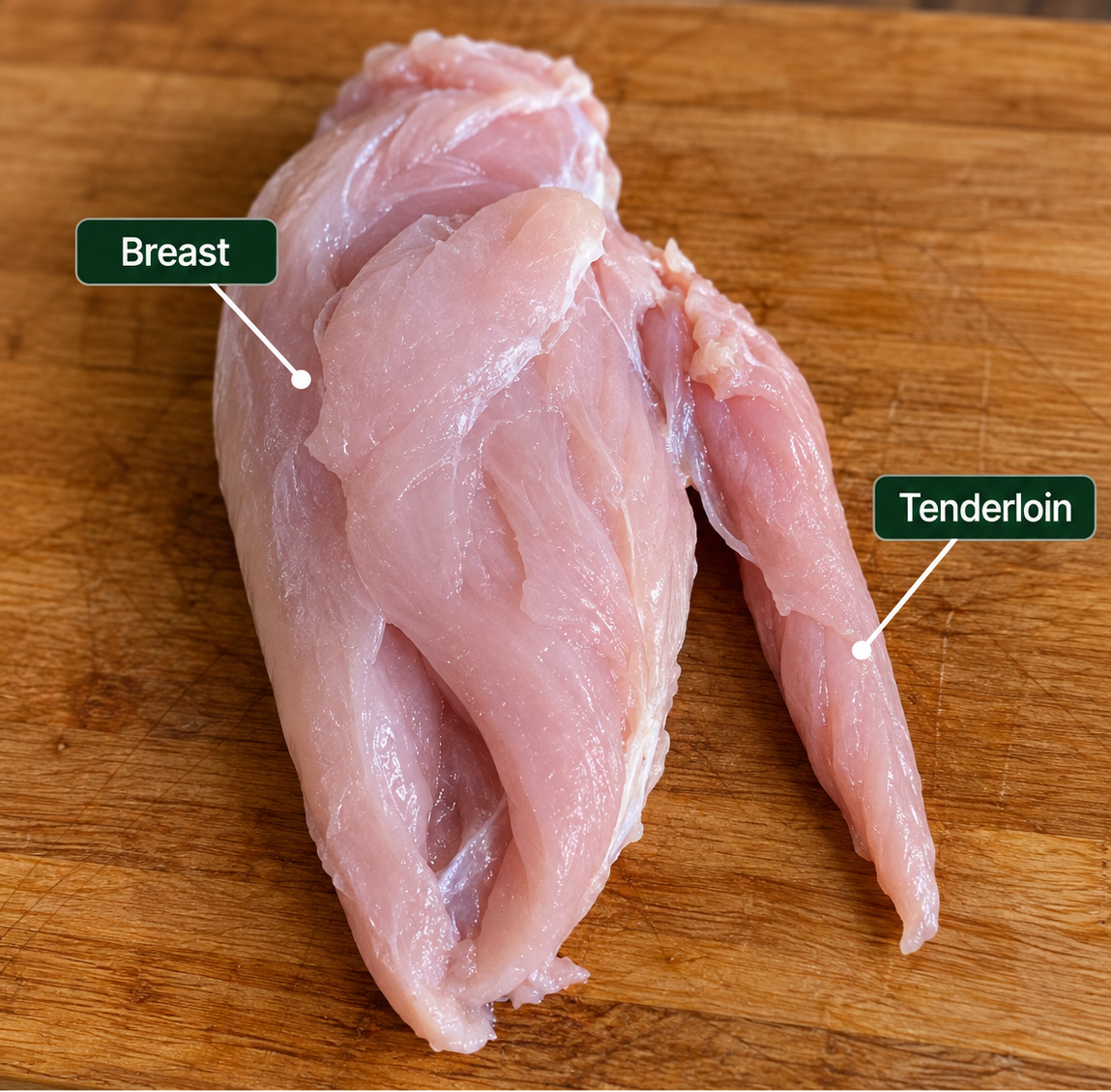
The tenderloin sits underneath the breast. Gently lift and cut to remove.
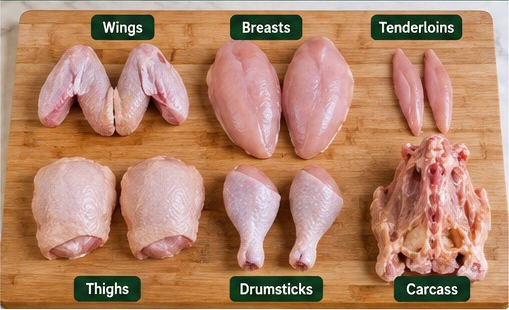 8
8Finished Cuts
You now have all the usable cuts from your whole chicken.
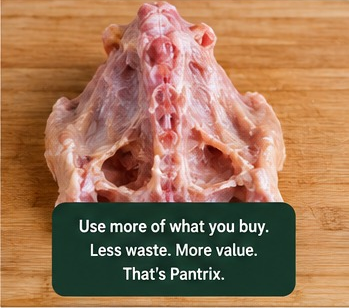 9
9The Carcass
The carcass isn't waste. Use it to make stock, broth or soup.
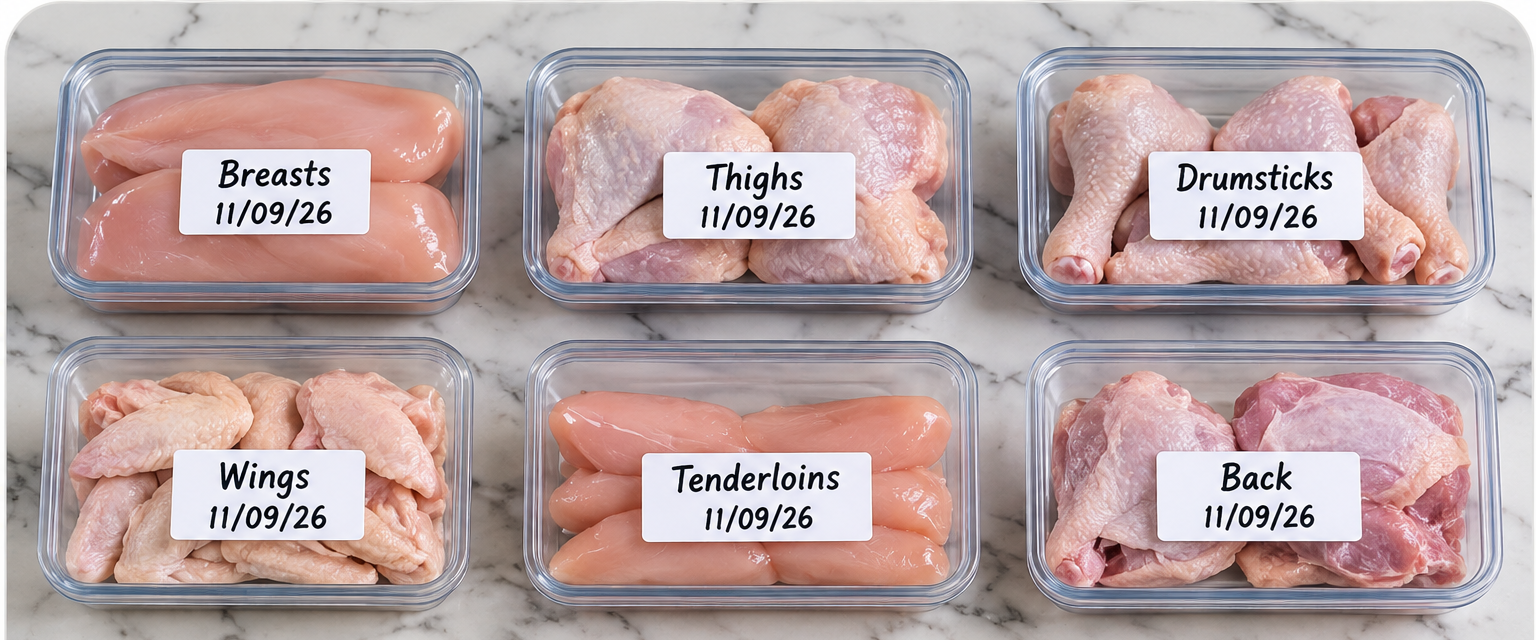 10
10Storage
Store cuts in airtight containers or freezer bags. Label and date. Use within 1–2 days in the fridge or freeze for longer storage.
Don’t throw away the carcass
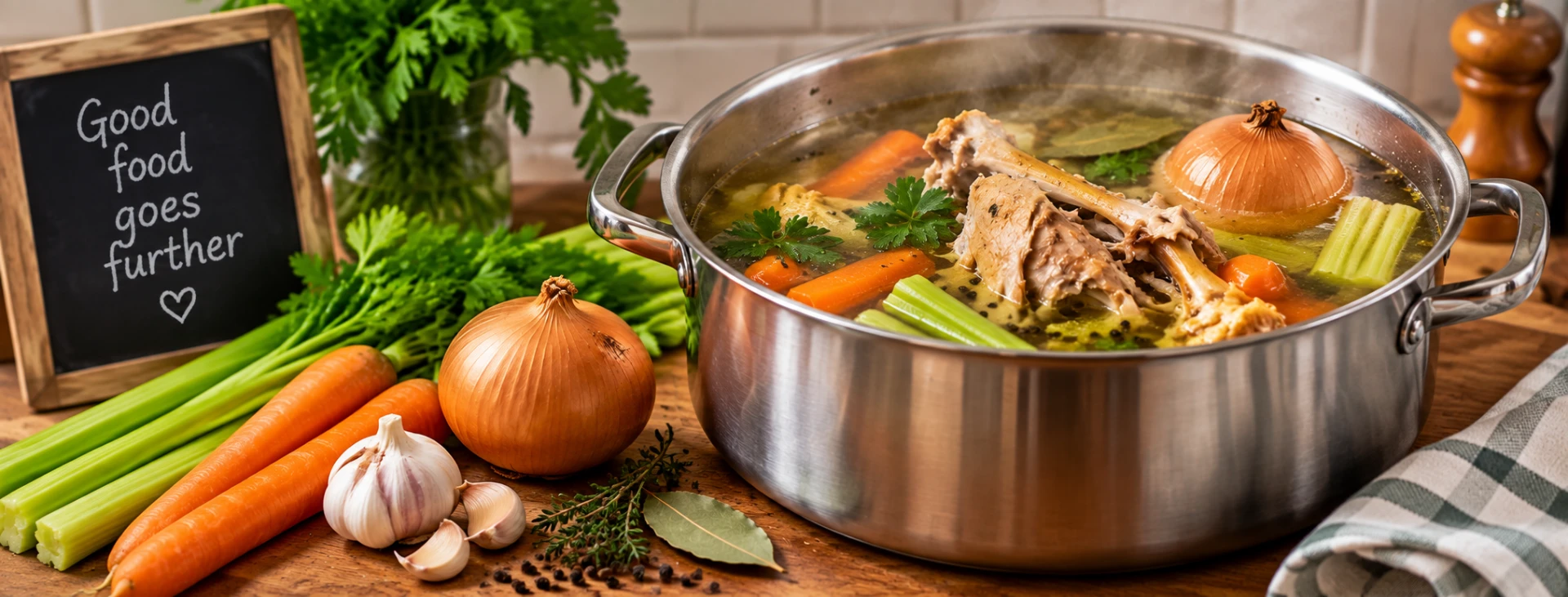
The carcass isn’t waste. Cover it with water in a pot with an onion, a carrot and a few peppercorns, simmer gently, then strain. You have stock for soup, gravy, risotto, casseroles and pasta sauces — from a part of the chicken most people throw in the bin.
Cool the stock, then keep it in the fridge for a few days or freeze it in portions. Any meat left on the frame after simmering can be picked off and used in sandwiches, fried rice or a pie filling.
Use more of what you buy. Less waste. More value. That’s Pantrix.
Storing your cuts
Store cuts in airtight containers or freezer bags. Label and date them. Use within 1–2 days in the fridge, or freeze for longer storage.
Read Freezing & Storing Meat