
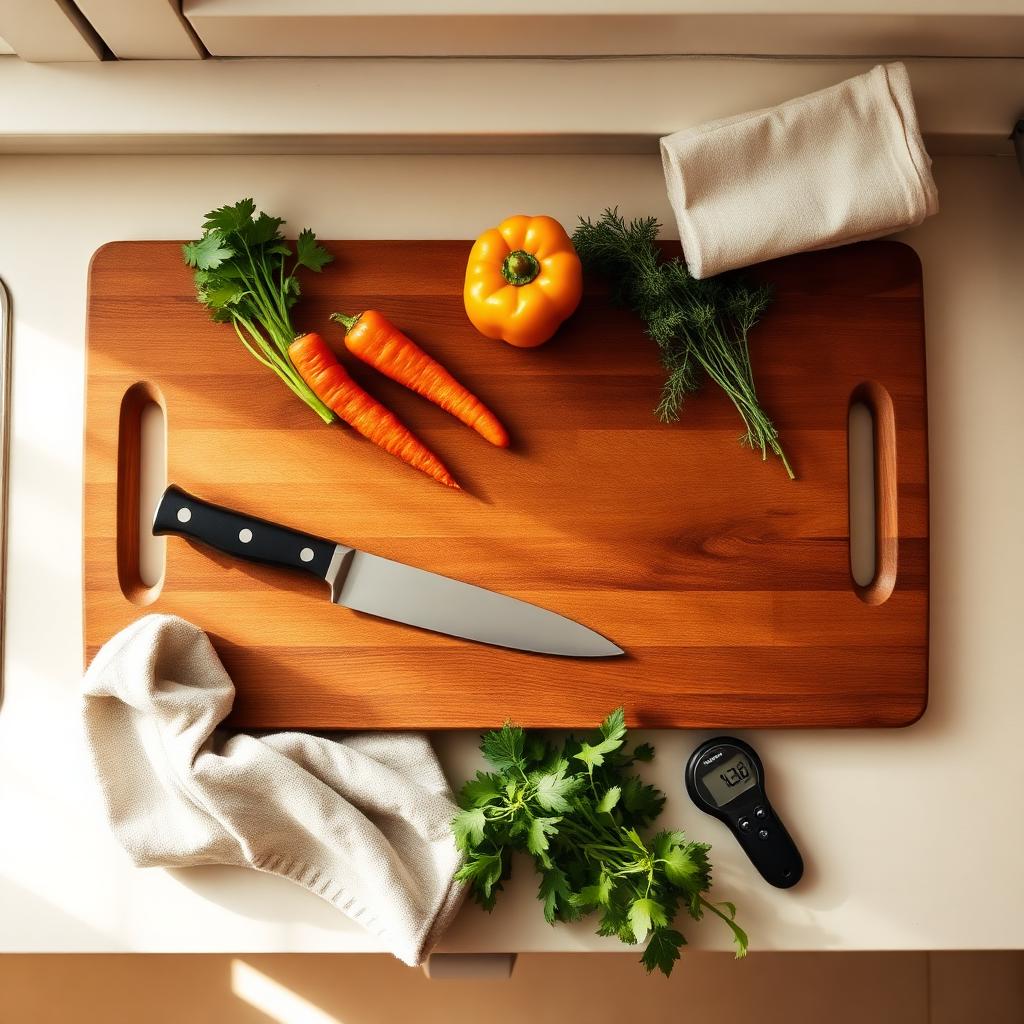
Confidence in the kitchen does not come from rushing or pretending you know everything.
It comes from preparing your space, understanding your equipment and repeating safe habits until they become automatic.
Most kitchen accidents are not caused by complicated cooking. They often happen during ordinary tasks such as cutting vegetables, draining hot water, moving a pan or cleaning up in a hurry.
The home is the most commonly recorded location for injury hospitalisations in Australia. In 2024–25, more than 175,000 hospitalised injuries with a known location occurred at home.
That figure includes many different kinds of injuries, not only kitchen accidents, but it is a useful reminder that familiar surroundings do not remove risk.
The kitchen contains sharp tools, hot surfaces, boiling liquids, raw ingredients and electrical equipment. None of these should stop us from cooking. They simply need to be handled with care.
A SAFE WORKSPACE COMES FIRST
Before cooking, clear enough room to work properly.
Remove bags, phones, unnecessary containers and anything else that may be knocked over. Wipe up spills as soon as they happen and keep the floor free from obstacles.
Place a damp cloth or non-slip mat underneath your chopping board. A board that moves while you are cutting is far more difficult to control.
Good organisation is not only about making cooking easier. It is one of the simplest safety tools in the kitchen.
USE KNIVES WITH RESPECT, NOT FEAR
A sharp knife is generally easier to control than a blunt one because it requires less pressure to cut through food.
Use the correct knife for the task and make sure the handle and your hands are dry.
Keep the fingers of your supporting hand tucked back and guide the knife with your knuckles where appropriate.
Always cut on a stable board and direct the blade away from your body.
Never try to catch a falling knife. Step back and let it fall.
When carrying a knife, hold it securely by your side with the blade pointing down. Do not leave knives hidden in a sink full of water where someone may reach in without seeing them.
TAKE CARE AROUND HEAT
Turn saucepan and frying-pan handles away from the edge of the stove so they cannot be knocked or pulled down.
Use dry oven mitts or a dry folded tea towel when handling hot cookware. Wet fabric can transfer heat quickly and cause burns.
Lift lids away from your face and body so steam escapes in the opposite direction.
Take particular care when moving hot oil, boiling water or heavy pans. Make sure the path is clear before lifting them.
Never pour water onto burning oil or fat. Turn off the heat if it is safe to do so, cover the pan with a suitable lid or fire blanket and move away. Call emergency services if the fire cannot be controlled safely.
KEEP RAW AND READY-TO-EAT FOOD SEPARATE
Raw meat and poultry may contain harmful microorganisms that can be transferred to cooked food, salads, utensils and work surfaces.
Use separate boards and utensils where possible, or wash them thoroughly with hot soapy water before using them for another food.
Do not place cooked food back onto a plate that previously held raw meat.
Wash and dry your hands carefully after handling raw meat, poultry, seafood or eggs.
Store raw meat securely and below ready-to-eat food in the refrigerator so liquids cannot drip onto other ingredients.
USE TEMPERATURE, NOT GUESSWORK
Potentially hazardous food should generally be kept at 5°C or colder, or 60°C or hotter.
The temperature range between 5°C and 60°C is often called the danger zone because food-poisoning microorganisms can multiply quickly within it.
Cook poultry and minced or rolled meat to at least 75°C in the centre.
A clean food thermometer is the safest way to check. Insert the probe into the thickest part of the food and avoid touching bone or the cooking tray.
Do not rely only on colour, texture or cooking time.
COOL AND STORE FOOD PROMPTLY
Do not leave cooked food sitting at room temperature for longer than necessary.
Divide large quantities into smaller, shallow containers so they cool more quickly in the refrigerator.
Label leftovers and place them where they can be seen and used.
Food safety and food-waste prevention often work together. Correct storage protects the food while also making it more likely to be eaten.
ASK FOR HELP WHEN YOU NEED IT
There is no embarrassment in asking someone to demonstrate how to use a knife, appliance or unfamiliar piece of equipment.
Read appliance instructions and do not operate electrical equipment with wet hands.
If a task feels unsafe, stop and reset the workspace before continuing.
Cooking confidently does not mean taking unnecessary risks. It means recognising risk early and making the task safer.
THE HABITS THAT MATTER
Before you begin: 1. Clear and dry the workspace. 2. Secure the chopping board. 3. Use the right tool for the task. 4. Keep raw and cooked foods separate. 5. Turn pan handles away from the edge. 6. Use a thermometer when food temperature matters. 7. Clean spills and equipment as you go. 8. Slow down whenever you feel rushed or unsure.
You do not need to be frightened of the kitchen.
You need a clear workspace, suitable tools and safe habits that become easier with practice.
That is where real kitchen confidence begins.