
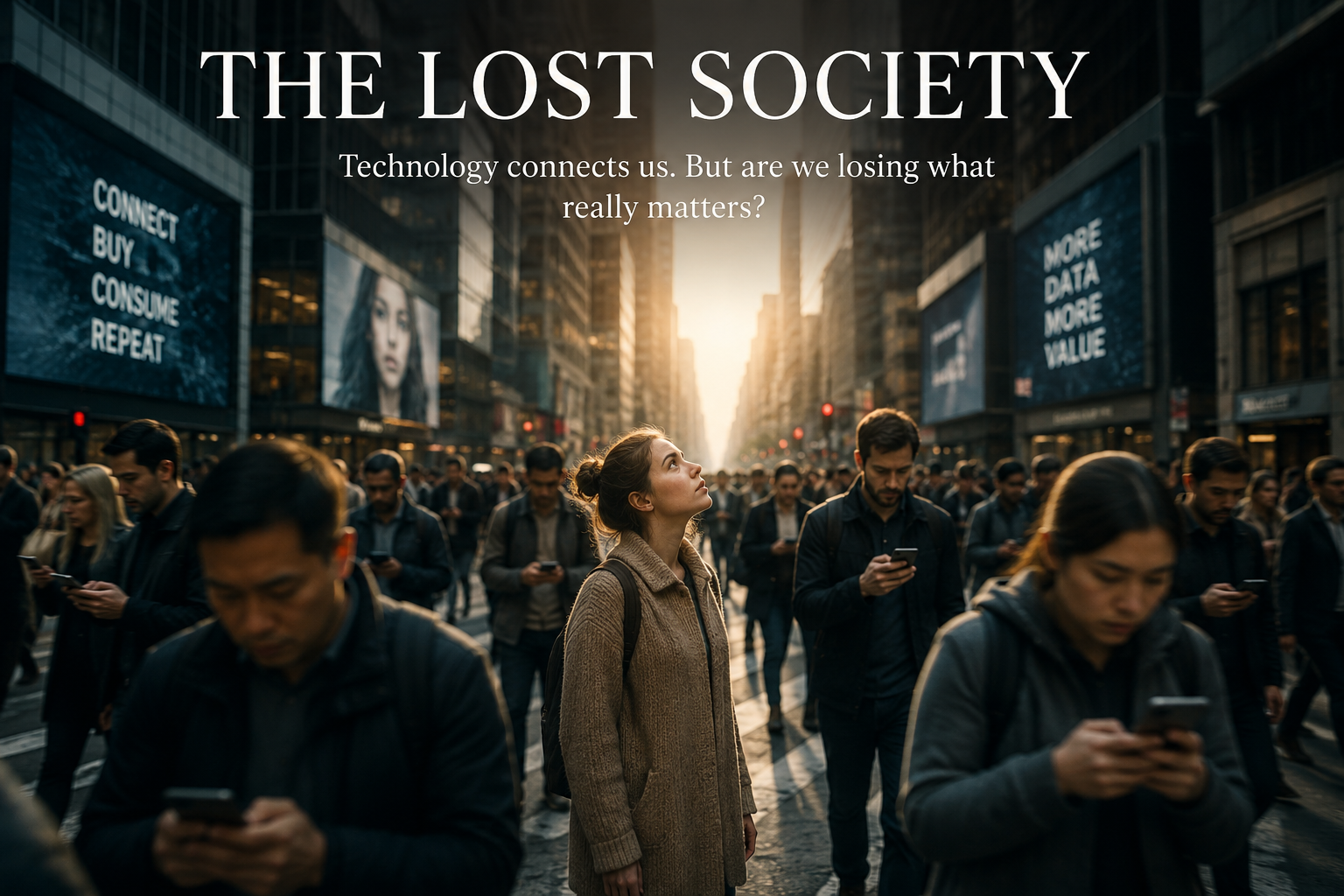
Somewhere along the way, it feels as though we have become more connected to everything and less connected to each other. We can reach almost anyone in seconds, yet more people seem lonely, overwhelmed and unsure of who or what to trust. Sometimes the simplicity of country life feels appealing - not because the past was perfect, but because life seemed to leave more room for people.
Technology has given us extraordinary things. It has opened access to knowledge, connected families across the world and made tasks possible that once took days. Artificial intelligence is part of that progress. People now talk to AI when they are confused, lonely, frustrated or simply need somewhere to put their thoughts.
But AI cannot replace genuine human connection. It cannot sit beside someone at the kitchen table, notice the look on their face, hold their hand or carry the history that exists between two people. If people increasingly turn to machines because human relationships have become too difficult, too rushed or too unsafe, perhaps the bigger question is not what AI can do. Perhaps it is what has happened to us.
Trust
Trust also feels harder to find. Governments tell us one thing, corporations tell us another, media outlets compete for attention, social platforms reward outrage, and increasingly we are surrounded by artificial content that can look and sound real. We have more information than any generation before us, yet knowing what is true can feel harder than ever.
When people stop trusting institutions, businesses, media and eventually one another, society becomes easier to divide. We retreat into smaller circles. We protect ourselves. We become suspicious. And after enough disappointment, isolation can start to feel safer than connection.
The Price of Progress
There are billions of dollars being made through technology, platforms and systems designed to capture our attention, our information and our money. At the same time, billions are lost through scams, fraud, data exploitation, hidden fees, addictive systems and predatory behaviour. Often the people who can least afford the loss are the ones who carry it hardest.
Progress is usually measured by what we can build, how quickly we can scale it and how much money it can make. But perhaps there should be another measure: what does it do to human life?
A thirst for knowledge is part of being human. Curiosity has created medicine, transport, communication and countless improvements to life. But creators also carry responsibility. If we build something powerful, should we not also ask whether humans can safely live alongside what we have created? If a creation does not improve life, should profit alone be enough reason to continue pushing it into the world?
Responsibility
I do not believe any one person has the answer. I do not believe we can simply wish our way back to a more peaceful world. Humanity has learned too many bad behaviours, and too many systems now reward them. But responsibility still matters.
Companies have responsibility. Governments have responsibility. Developers, creators, leaders and consumers all have responsibility. Innovation should not only ask, 'Can we do this?' It should also ask, 'What happens to people if we do?'
We were gifted with life and a world capable of sustaining it. Maybe our greatest achievement should not be how much we can extract from it, automate within it or sell through it. Maybe it should be how well we learn to look after each other while we are here.
Technology will continue to change. AI will become more capable. The world will keep moving. The question is not whether humans can keep building.
It is whether humans will remember how to be.
Written by Michelle Hanlon
Pantrix Australia